matter.setupMicroBand

class nucleardatapy.matter.setup_micro_band.setupMicroBand(models=['2016-MBPT-AM'], nden=10, ne=200, den=None, matter='NM', e2a_min=-20.0, e2a_max=50.0)[source]

Instantiate the object with statistical distributions averaging over the models given as inputs and in NM.

Parameters:
  • models (list.) – The models given as inputs.

  • nden (int, optional.) – number of density points.

  • ne (int, optional.) – number of points along the energy axis.

  • den (None or numpy array, optional.) – if not None (default), impose the densities.

  • matter (str, optional.) – can be ‘NM’ (default), ‘SM’ or ‘ESYM’.

Attributes:

Parameters:
  • model (str, optional.)

  • between (The model to consider. Choose)

  • nden (int, optional.)

  • consider. (The density points to)

  • ne (int, optional.)

  • direction. (The number of intervalle in the energy)

  • den (None or numpy array.)

  • None (If)

  • densities (then the density range is calculated automaticaly. If den = list of)

  • them. (the code will prefer using)

  • matter ('SM' symmetric)

  • matter

  • matter

  • energy. (or 'Esym' the symmetry)

  • e2a_min (float, optional.)

  • default (e2a_max is set to be 50 MeV by)

  • practitionner. (or any number passed by the)

  • e2a_max (float, optional.)

  • default

  • practitionner.

den

Attribute a set of density points.

init_self()[source]

Initialize variables in self.

matter

Attribute matter str.

models

Attribute model.

nden

Attribute number of points in density.

print_outputs()[source]

Method which print outputs on terminal’s screen.

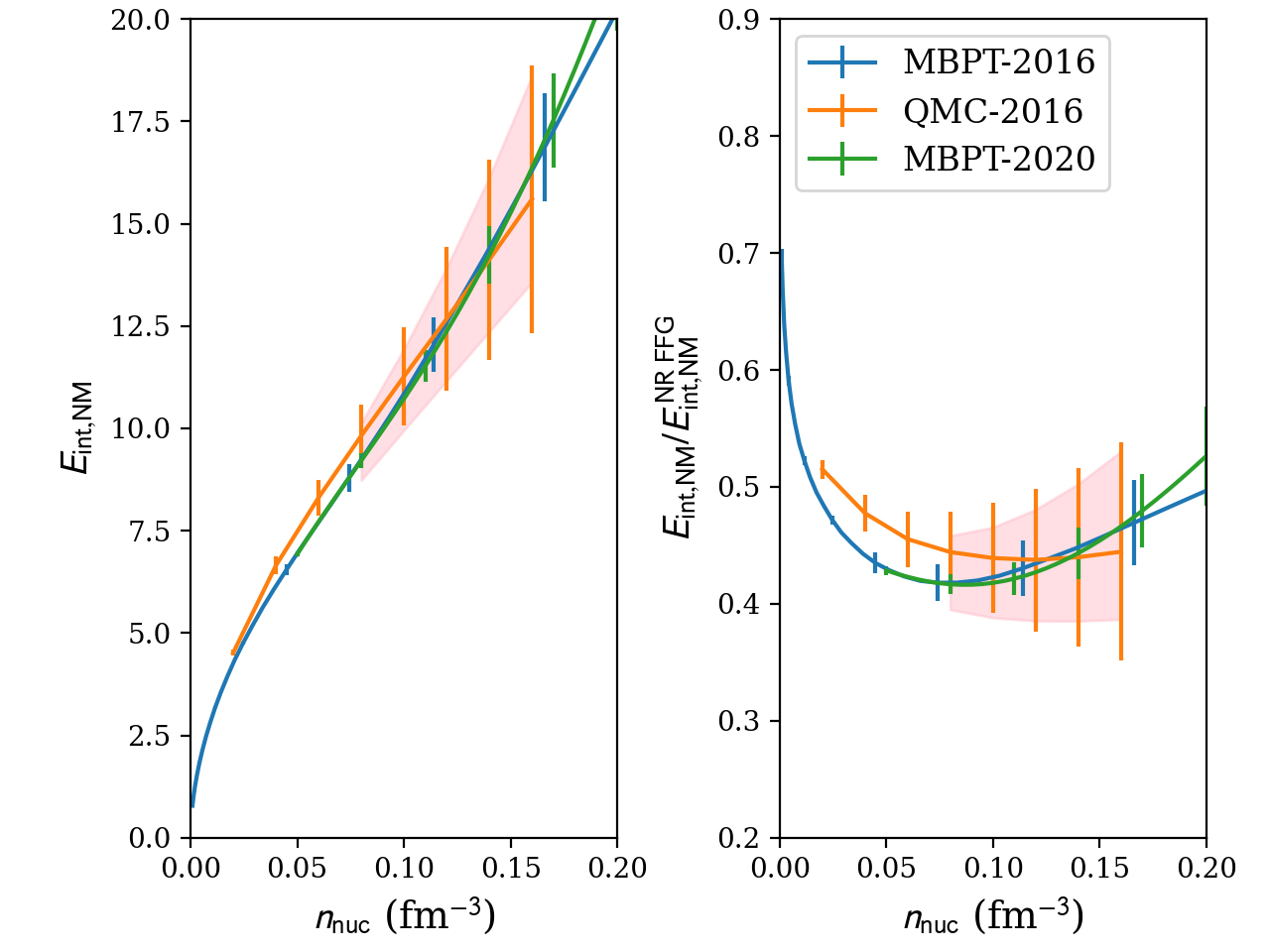
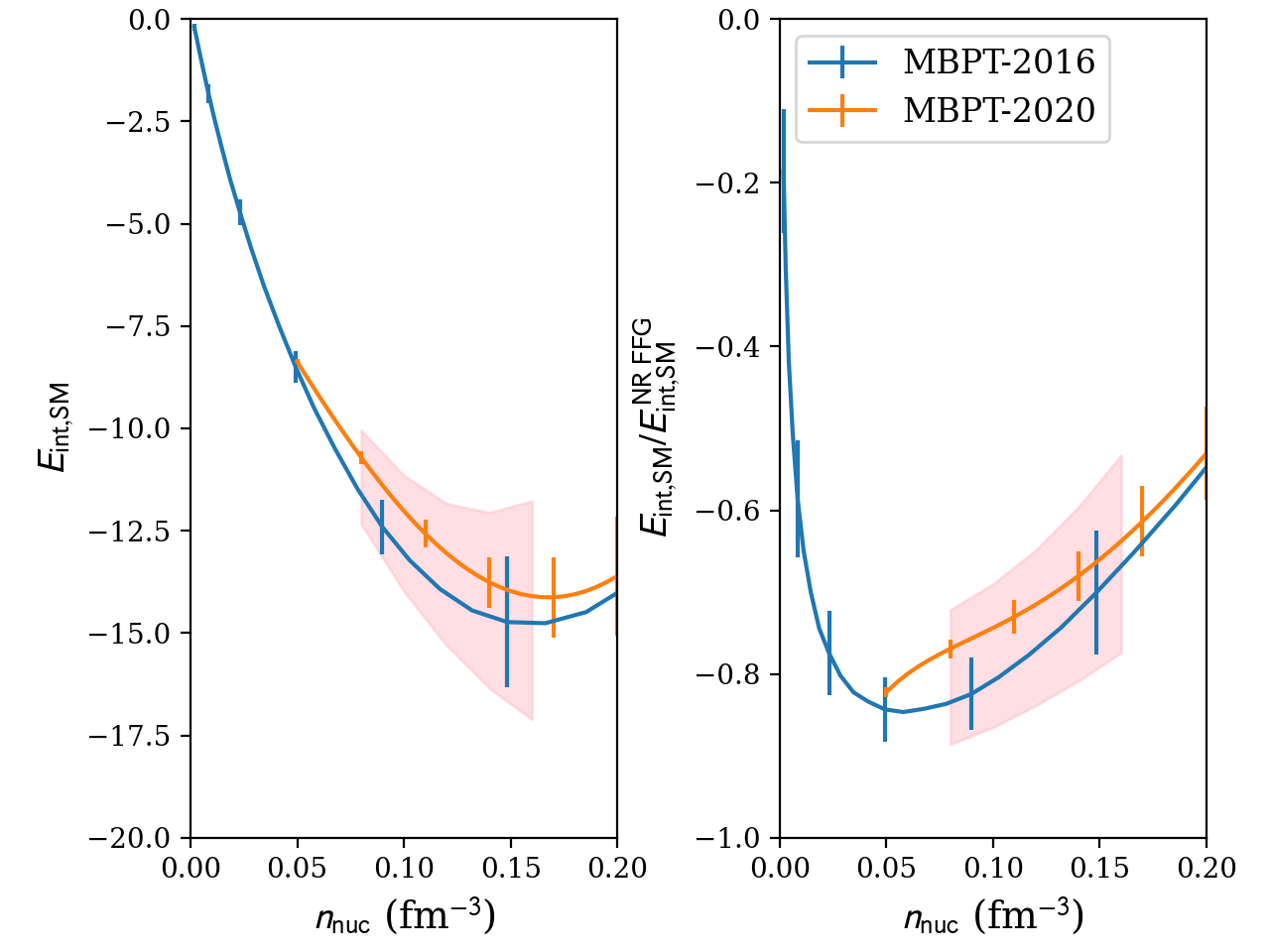
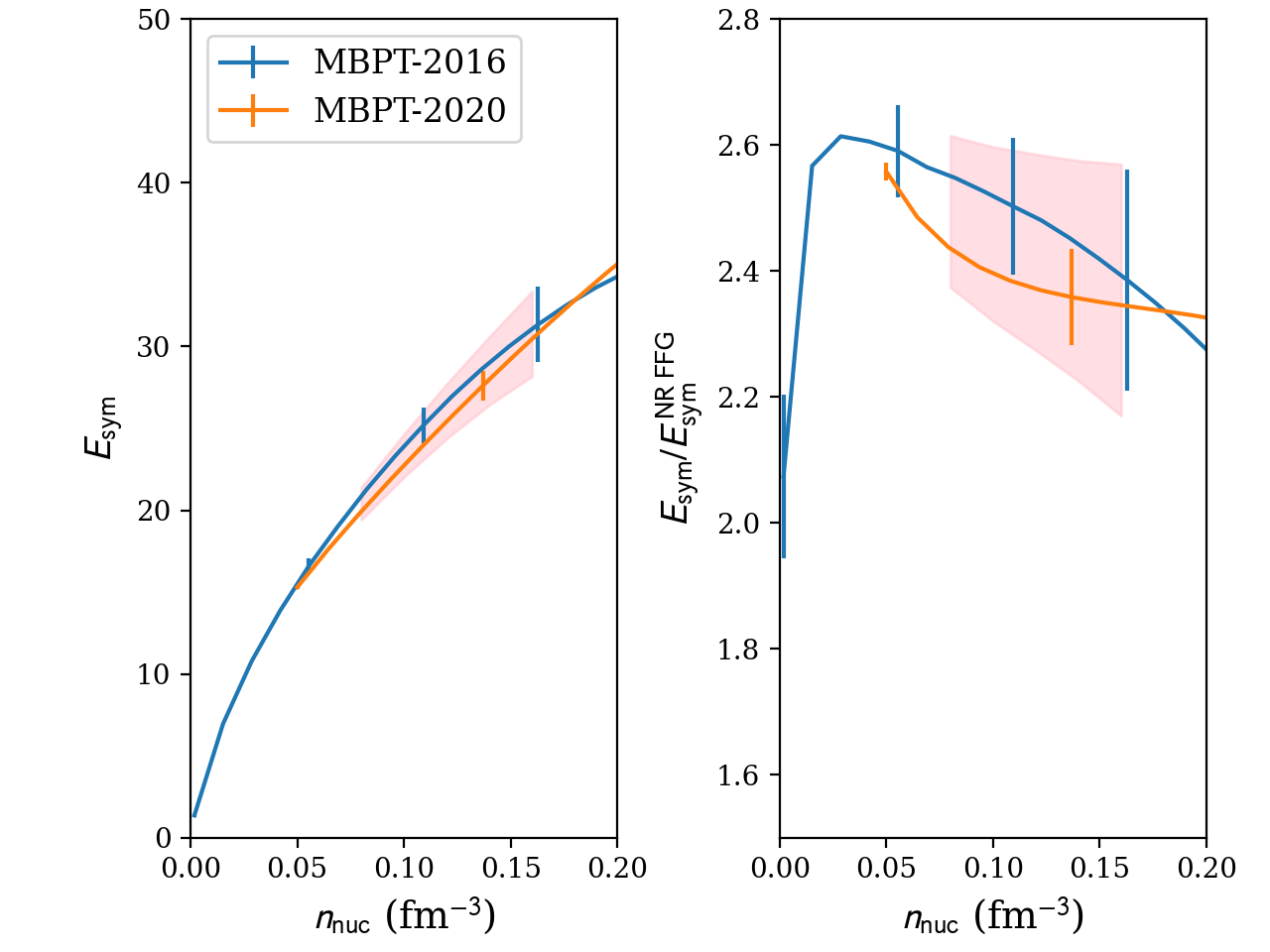
Here are a set of figures which are produced with the Python sample: /nucleardatapy_sample/matter_setupMicro_band_plot.py
map to buried treasure

Uncertainty band in NM obtained from the analysis of different predictions: MBPT-2016, QMC-2016 and MBPT-2020.
map to buried treasure

Uncertainty band in SM obtained from the analysis of different predictions: MBPT-2016 and MBPT-2020.
map to buried treasure

Uncertainty band for the symmetry energy obtained from the analysis of different predictions: MBPT-2016 and MBPT-2020.