matter.setupMicroLP

nucleardatapy.matter.setup_micro_lp.micro_LP_models()[source]

Return a list with the name of the models available in this toolkit and print them all on the prompt. These models are the following ones: ‘1994-BHF-SM-LP-AV14-GAP’, ‘1994-BHF-SM-LP-AV14-CONT’, ‘1994-BHF-SM-LP-REID-GAP’, ‘1994-BHF-SM-LP-REID-CONT’, ‘1994-BHF-SM-LP-AV14-CONT-0.7’, ‘2006-BHF-SM-AV18’, ‘2006-BHF-NM-AV18’, ‘2006-IBHF-SM-AV18’, ‘2006-IBHF-NM-AV18’, ‘2007-BHF-NM-LP-BONNC’.

Returns:

The list of models.

Return type:

list[str].

class nucleardatapy.matter.setup_micro_lp.setupMicroLP(model='1994-BHF-AV14-SM-GAP')[source]

Instantiate the object with Landau parameters from microscopic calculations choosen by the toolkit practitioner.

This choice is defined in model, which can chosen among the following choices: ‘1994-BHF-SM-LP-AV14-GAP’, ‘1994-BHF-SM-LP-AV14-CONT’, ‘1994-BHF-SM-LP-REID-GAP’, ‘1994-BHF-SM-LP-REID-CONT’, ‘1994-BHF-SM-LP-AV14-CONT-0.7’, ‘2006-BHF-SM-AV18’, ‘2006-BHF-NM-AV18’, ‘2006-IBHF-SM-AV18’, ‘2006-IBHF-NM-AV18’, ‘2007-BHF-NM-LP-BONNC’.

Parameters:

model (str, optional.) – Fix the name of model. Default value: ‘1994-BHF-LP’.

Attributes:

Parameters:
  • model (str, optional)

  • between (The model to consider. Choose)

init_self()[source]

Initialize variables in self.

model

Attribute model.

print_outputs()[source]

Method which print outputs on terminal’s screen.

Here are a set of figures which are produced with the Python sample: /nucleardatapy_sample/matter_setupMicroLP_plot.py
map to buried treasure

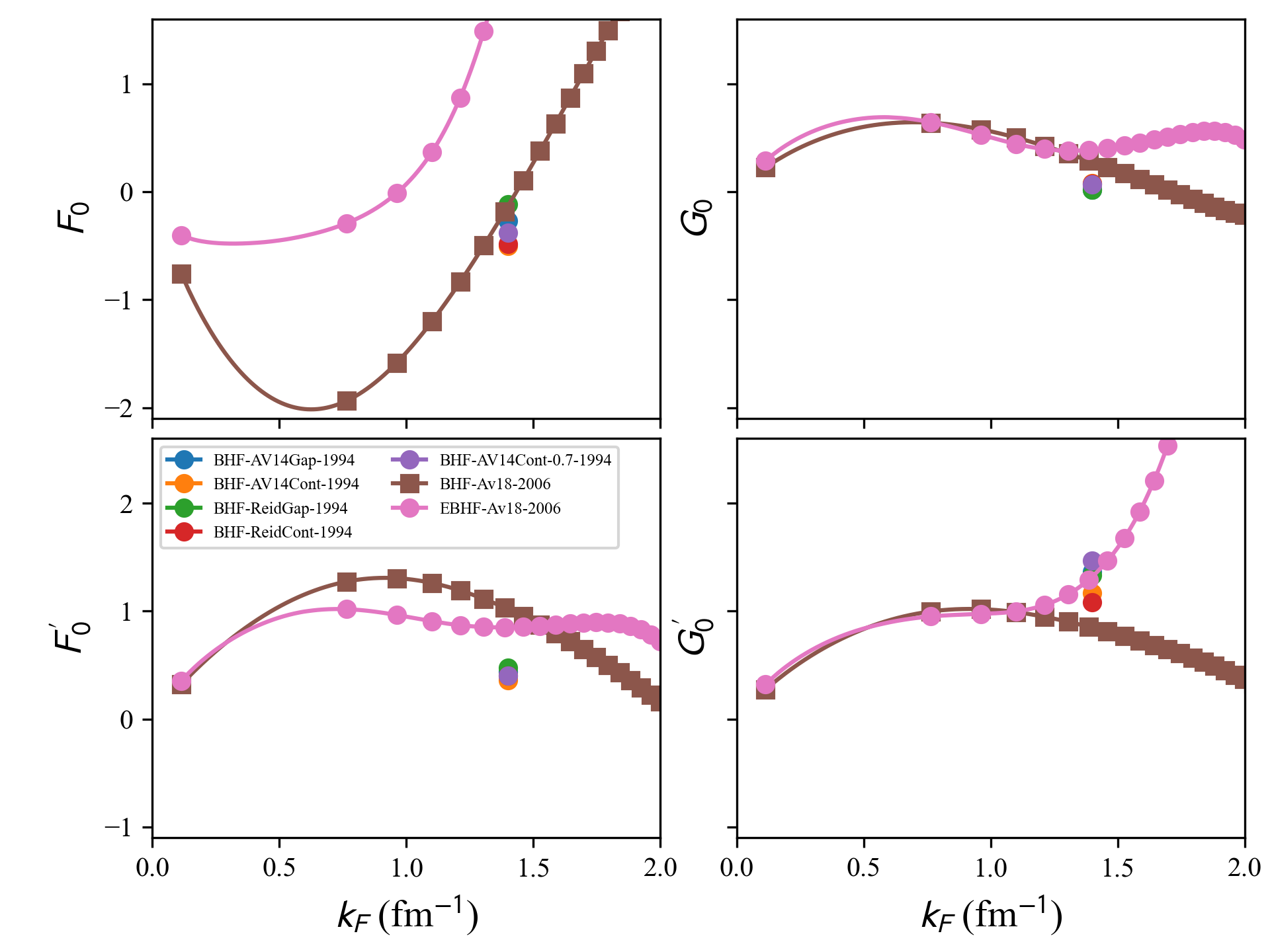
This figure shows the L=0 Landau parameters in SM for different NN interactions obtained from BHF calculations.
map to buried treasure

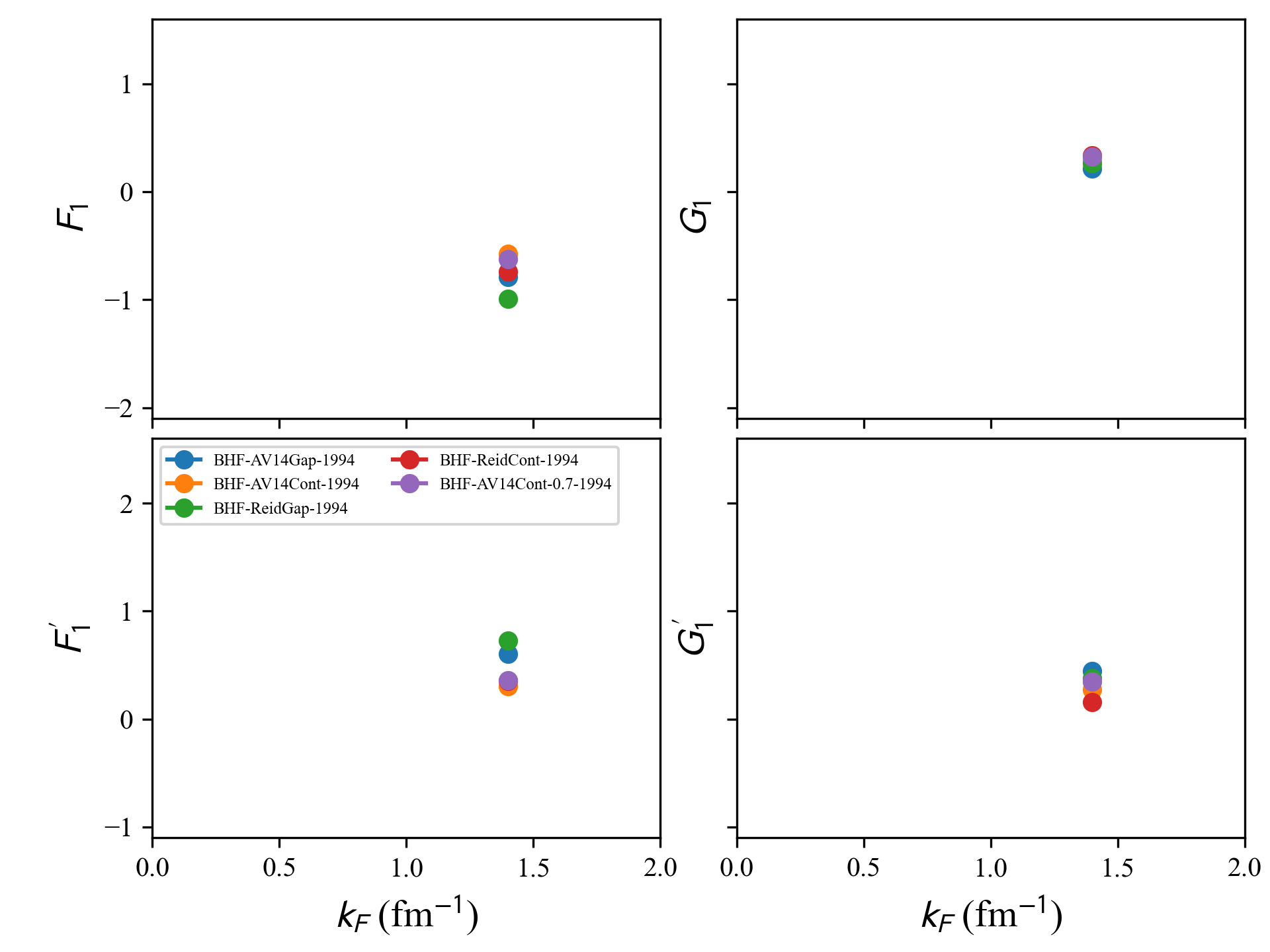
This figure shows the L=1 Landau parameters in SM for different NN interactions obtained from BHF calculations.
map to buried treasure

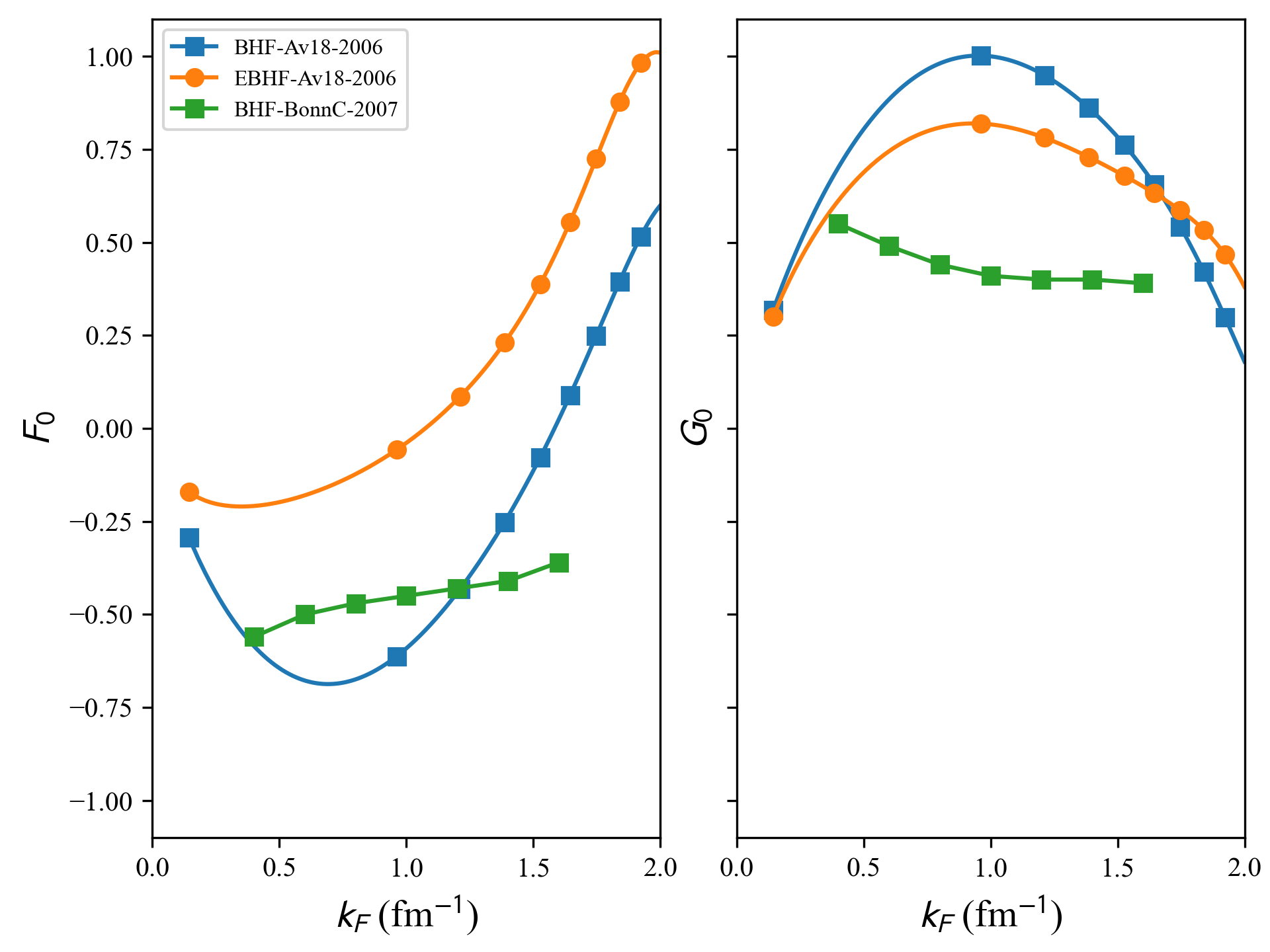
This figure shows the L=0 Landau parameters in NM for different NN interactions obtained from BHF calculations.